
Educating Image Bearers
There's More to Education Than a Career Path

Ever since one of our sons (Noah) was little, he was fascinated with shapes and movement. I remember him playing endlessly with trains, not because he loved Thomas the Train, but to watch how the wheels moved and worked.
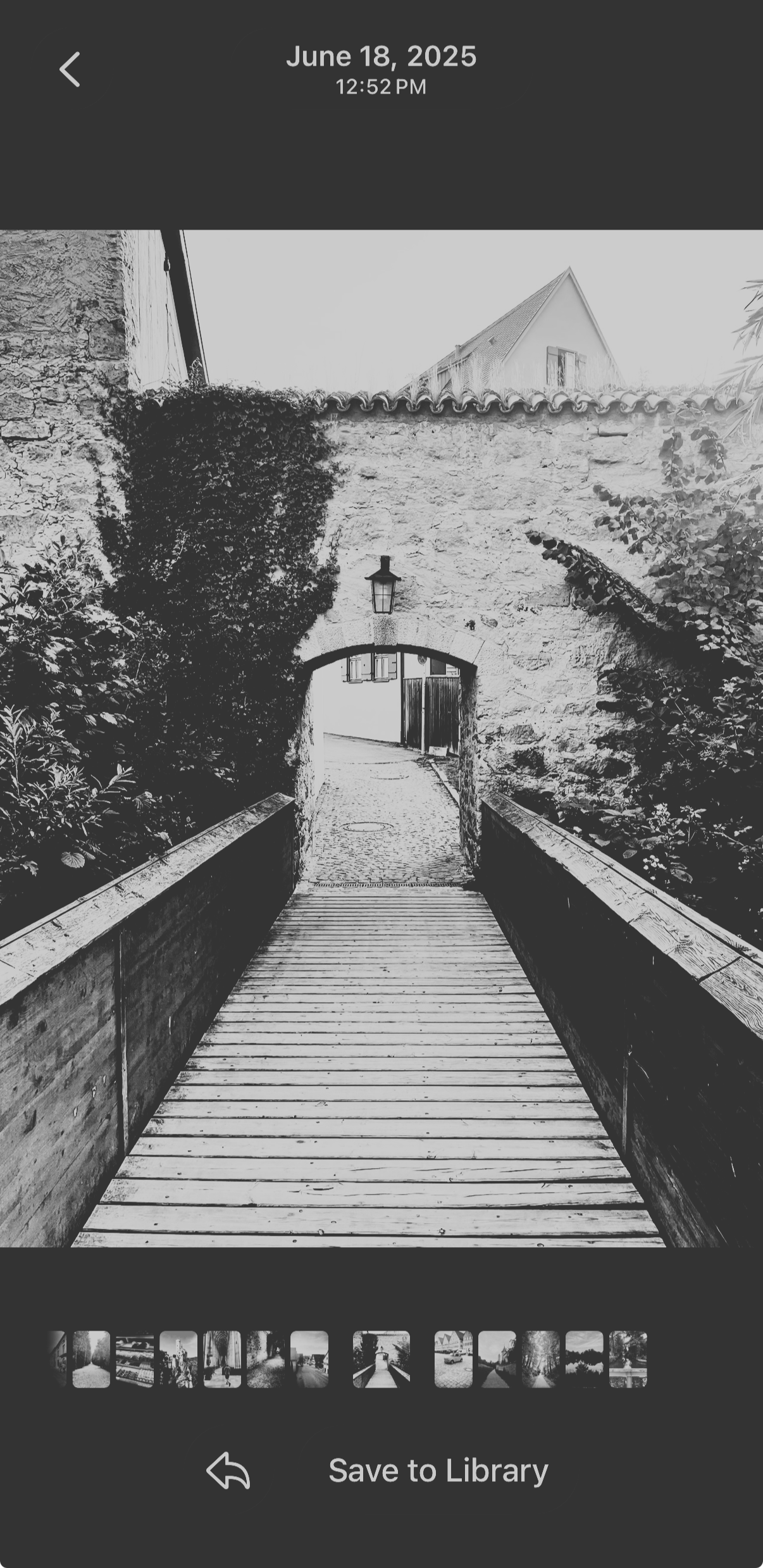
Last summer, my husband took our kids on a trip to Europe. Instead of sweeping views, Noah’s camera roll captured the elements of a city. The geometry of a doorway. The curve of a street that makes you want to keep walking. The proportion of a window to a facade that makes a building feel inviting rather than merely something to look through. He likes to study what makes cities interesting, and the subtle architecture that is inviting to people.
And yet, when he was choosing a direction for study, we advised and ultimately, he decided, to nurture his artistic gifts on the side and prioritize a skill that would end in a job. He’d like to save up money for his own home, and maybe a family some day. So he moved into cybersecurity, something he is interested in, and reads books like The Creative Imagination on the side and occasionally jumps into things like color theory (who knew! it’s actually fascinating).
I have sat with that advice long enough to wonder whether it was being wise or whether we were simply going with the assumption of the secular age: that the value of knowledge is simply what it creates in economic value. There are practicalities that are wise to consider. And yet.

We Have Accepted a Hierarchy That Is Not Ours
In almost every higher ed institution in America, including Christian ones, the disciplines are ranked by utility. STEM sits at the top: rigorous, fundable, the pathway to employment. The humanities occupy an uneasy middle, nice to know but assumed little use. And arts hover near the bottom: electives and usually the first line item cut when budgets tighten. Theology floats somewhere off to the side, required, nodded to, but not quite academic in the way physics is academic. Spiritual, perhaps, but not academically serious.
When we rank knowledge by what it earns, we’ve already decided what education is for. And when Christian schools go along with that, which most have because the pressure to survive is real, they haven’t built something different. They’ve built the same thing as the school down the street and added a chapel.
This isn’t just an institutional problem, it’s what we value as a society. What we reward, what we value. It lands in the lives of real kids whose particular way of seeing the world, whose gift, whose calling, whose particular imprint of the image of God, gets quietly redirected toward something more practical.
A Framework That Questions It at the Root
I recently came across the work of Dr. Jim Spiegel through a chapel session he gave at Geneva College. He offers a framework that gets at what I’ve been trying to put my finger on.
Spiegel focuses on the idea that the world, including life as we know it, is an ongoing work of art and God is a literal artist. He connects it to the work of Augustine, Aquinas, and Jonathan Edwards. And it challenges the way we think about what education is even for.
I appreciated how he classified the disciplines within the framework:
The sciences (physics, chemistry, biology, history, psychology) are the study of God’s handiwork. They’re how we examine what he made.
The arts (literature, music, visual arts, design, architecture, urban design) are the study of humans mirroring God’s creativity. They’re where we most directly exercise our image-bearing capacity.
Theology, both revealed and natural, is the study of the cosmic artist himself.
When you organize knowledge this way, the question isn’t what will this get me, rather, it’s what does this reveal. And that changes everything about how you rank the disciplines. For example:
Theology stops being a side note and becomes the foundation.
In fact, every subject depends on it for its deepest meaning. Think about what happens when a child picks up a shell on the beach and asks why it’s beautiful. A science class can explain many things about the shell, all true and worth knowing. But it can’t answer the question the child actually asked. Why is it beautiful? Why does it make you stop and look? That question belongs to theology. A student who never gets that answer has learned a lot of facts and missed the point entirely.
But here’s what’s also true. When science is taught with that question still on the table, it doesn’t just become more meaningful. It becomes a way of knowing God. Every subject does. The sciences show us how he works. The arts show us how he creates and what he values. Theology names him directly, and studied together, we grow in understanding and wisdom.
Science, taught this way, produces wonder.
This past week I was on a beach in Clearwater with Violet, actually turning shells over in the sand. There is something about getting that close to creation that does something to you. You stop analyzing and start wondering at its perfectness and beauty. That’s what good science is supposed to feel like. It makes us stand in awe.
The spiral of a shell follows the same mathematical pattern in other parts of nature, the hurricane, a sunflower, and the galaxy. That’s not a coincidence. That’s a signature. And a student who learns to see it that way isn’t just becoming a better scientist. She’s learning something about the God who made it. She’s learning that he is ordered, that he is creative, that he works with consistency and intention at every scale of reality.
The arts and humanities aren’t enrichment only. They’re crucial formation.
The student who learns to draw is learning to see. The student who learns music is learning a mathematical language Augustine traced back to the nature of God himself. The student who studies urban design is asking what human flourishing actually looks like in a place of brick and mortar and light. These aren’t soft questions. They’re some of the most serious questions a person can ask. And because they don’t show up on a salary survey, we’ve stopped taking them seriously.
Part of why we’ve abandoned the arts is the eye roll that comes naturally when you look at much of contemporary art. When art loses its anchor, when it’s no longer about the edification of your neighbor or the mirroring of divine beauty, it doesn’t go neutral, but haywire. Creativity cut off from God and neighbor has nothing to offer but the self and a distorted understanding. Which is why we sat scratching our heads looking at the modern art in Chicago museum - a literal bunch of trash glued to a wall. Complete with a security guard. But I digress.
These three things aren’t separate subjects. They’re three ways of seeing the same reality. And a student who gets through school without anyone connecting them comes out knowing a lot about isolated pieces of the world and very little about how any of it fits together. She’s been trained as a specialist but never really formed as a person.
What Spiegel is after is students who don’t just ask how does this work but what does this mean, is it beautiful, and what does it tell me about its maker. The same for humanities. What is the pattern of man, societies, and ideas? Those aren’t easier questions. They’re harder. But they’re the ones worth asking.
What Would It Take to Get There?
We’ve absorbed without really noticing, a way of thinking about knowledge that puts salary and utility at the top.
It means high school isn’t just preparation to the career fair. Or college only about the salary it secures. Those conversations matter, but they aren’t the whole point. Parents that take this seriously form children who know how to engage the world not just as workers but as human beings, people who can notice beauty, ask hard questions, serve others in meaningful ways, and contribute something that doesn’t fit neatly on a resume.
If success means the highest salary or a 9-5 job, the model we have is working fine. But if success means forming people who bear the image of God, who perceive beauty, create meaning, and help their neighbors flourish, then we are losing. Quietly, practically, with the best of intentions, we are losing.
What do we lose when education gets this narrow? We produce graduates who are competent and have degrees but who have never really been asked what anything means or what it reveals about the God who made it. It produces people who are good at their jobs but haven’t been given the tools to be fully human. I wonder what we are missing out on.
The image of God in us is not just to be productive. It perceives. It creates. It wonders. It asks why something is beautiful and what that beauty is pointing to. We are people made to study the handiwork, to mirror the creativity, to know the artist himself. We have the Bible as the foundational humanities text, and many more to build from there. This is what has created some of the world’s greatest scientists and inventors, sculptors and artists, thinkers and writers.
As AI takes over more of what we once called knowledge work and technical problems become more easily solved, the question of what makes us distinctly human is becoming urgent in a new way. The answer was never our efficiency or memorization of information. It was always our capacity to perceive, to make, to wonder, and to worship. One could say: to know God and enjoy Him forever.
An education built around that capacity isn’t behind the times. It’s ahead of them.
Behind the Scenes: For paid subscribers, the story behind the post:
